Pvt. Ltd.
In the high-stakes world of fine jewelry manufacturing, the difference between a masterwork and a failed cast often comes down to one invisible factor: the master alloy.
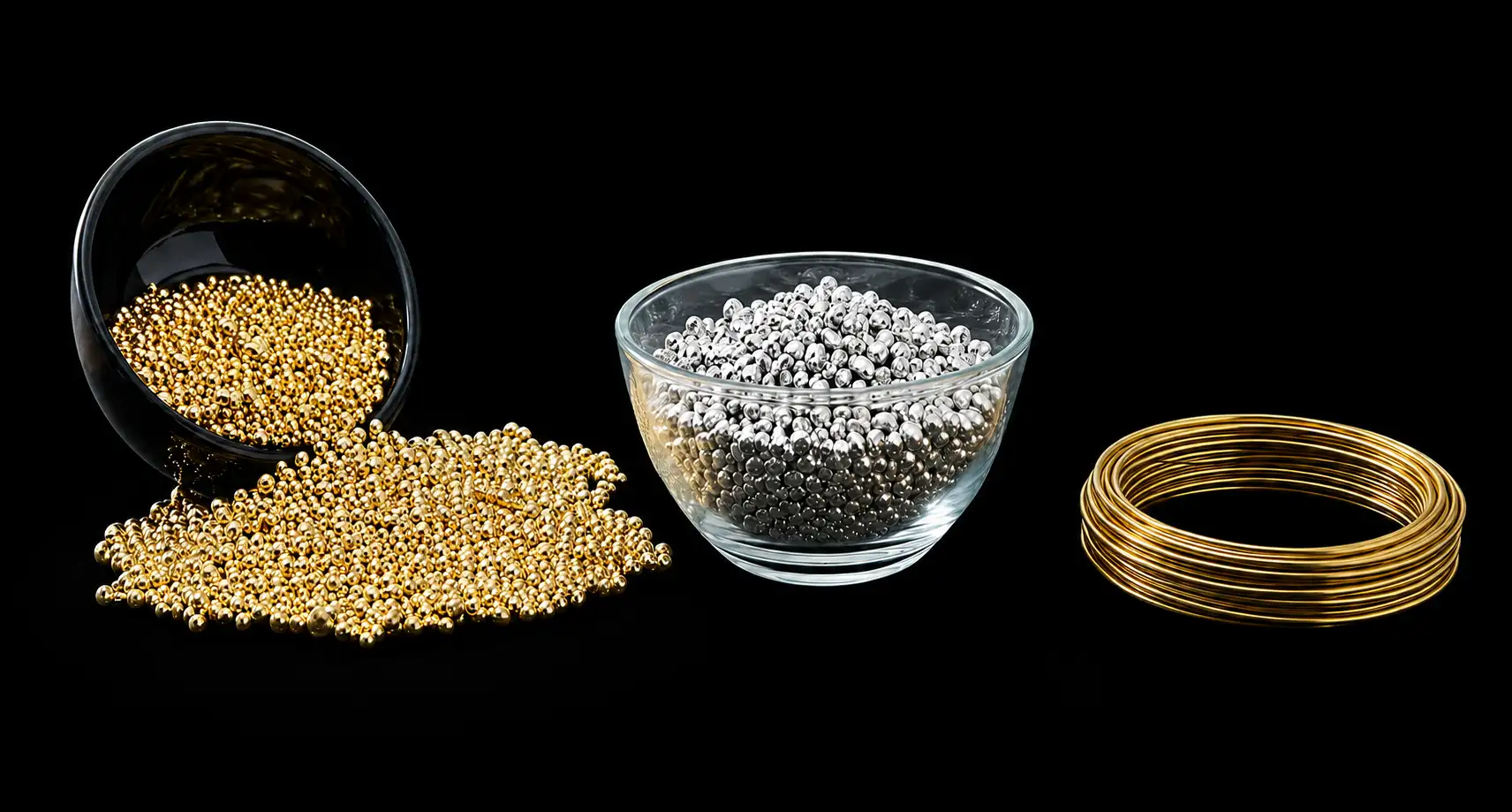
Master alloys are precisely engineered blends of metals designed to modify the physical and mechanical properties of 24K gold or fine silver.
Pure 24K gold is exceptionally soft and ductile, making it unsuitable for everyday jewelry. Master alloys are the solution. By adding specific combinations of metals—such as copper, silver, or zinc—metallurgists can:
Color consistency is a major pain point for manufacturers. Master alloys are the engine behind "18K yellow" or "14K rose" gold consistency. By managing ratios with surgical precision, manufacturers maintain color reliability across every production run.
Using high-quality master alloys is a direct investment in efficiency. Properly formulated alloys contain deoxidizers that minimize metal loss during melting. By reducing common defects like gas porosity and oxidation, you reduce your scrap rates and spend significantly less time on costly re-work.
Casting is a "ceremony of transformation," but even minor impurities can ruin a high-value piece. To achieve flawlessness, focus on these technical controls:
The selection process should be guided by your end product:
Repairing, joining, and assembling jewelry requires specialized eutectic alloys—solders. The modern industry has shifted decisively toward cadmium-free solders.
Use the right material for the application:
| Alloy / Solder Type | Karat Range | Best Applications | Key Benefits |
|---|---|---|---|
| Gold Casting | 9K–24K | Rings, pendants | High fluidity, pore-free finish |
| Gold Fabrication | 14K–18K | Chains, wire | Superior malleability |
| Silver Casting | Fine / Sterling | Fine jewelry | Tarnish resistance |
| Cadmium-Free Solder | All | Repairs, assembly | Safe, strong, invisible seams |
Q: What is the best master alloy for rose gold?
The "best" rose gold master alloy depends on the desired intensity of the pink or red hue.
Generally, alloys with a higher copper-to-silver ratio produce a deeper, richer red. For
high-volume manufacturing, look for master alloys that contain specific grain refiners to ensure
the alloy maintains its color and workability through multiple casting cycles.
Q: Are cadmium-free solders as effective as cadmium-based ones?
Yes. Modern cadmium-free solders are engineered to match—and often exceed—the flow, strength,
and melting ranges of older, toxic alternatives. They provide seamless, durable joints that are
easier to polish and safe for both the jeweler and the end-consumer.
Q: How can I reduce porosity in gold casting?
Porosity is usually caused by gas entrapment or oxidation. To reduce it, ensure your master
alloy contains active deoxidizers, maintain precise temperature control to prevent overheating
the metal, and verify your vacuum-assisted casting equipment is pulling a consistent, full
vacuum to remove air from the mold.
Q: What alloys work best for intricate chain designs?
For intricate chains, you need a "fabrication" master alloy rather than a "casting" alloy.
Fabrication alloys are designed with higher levels of elongation and malleability, allowing the
metal to be drawn into fine wire and twisted without the risk of cracking or snapping.
Q: Are there hypoallergenic master alloy options?
Yes. If you are manufacturing for a market with high sensitivity to metals, look for master
alloys that are "nickel-free." These alloys replace nickel with other metals like palladium or
cobalt to achieve the desired white color without the risk of triggering allergic reactions.
In 2026, the jewelry market rewards manufacturers who prioritize technical transparency. Whether you are a master jeweler or a high-volume producer, viewing your alloy and solder choices as a vital part of your technical strategy will distinguish your work from the competition.
By choosing scientifically formulated master alloys and safer, more efficient soldering solutions, you are not just making jewelry; you are crafting a legacy of durability and beauty.
Are you ready to optimize your production line? Contact our technical support team to request custom alloy specification sheets or a consultation on solving your specific casting challenges.
Request custom alloy specifications or ask our team for help with your casting challenges.
Ready to enhance your craftsmanship? Get reliable, high-quality materials that help you create with confidence and consistency.